
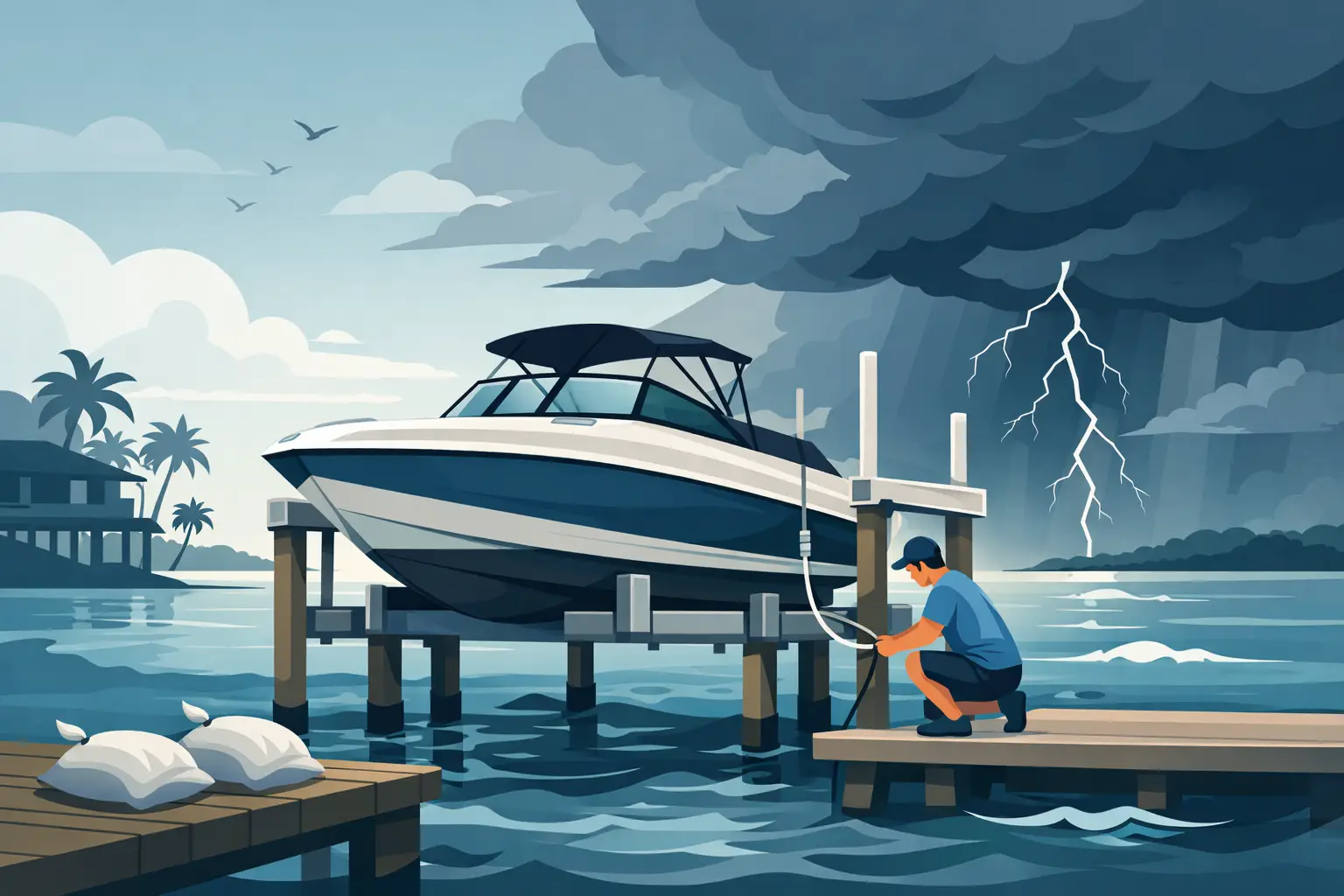
How to Secure a Boat Lift Before Gulf Coast Storms
A boat lift protects one of the biggest investments on your waterfront property, but it is only as dependable as the structure holding it in place. The question of how to secure boat lift equipment becomes urgent when a tropical system enters the Gulf, but the right time to prepare is well before a storm watch is issued. Proper lift security starts with a sound installation, continues with routine inspections, and follows a storm plan built for your specific shoreline.
On the Alabama Gulf Coast and Florida Panhandle, wind, surge, waves, changing water levels, and floating debris can all place forces on a lift that are far beyond normal operating conditions. A few ropes or a last-minute adjustment will not make up for worn cables, undersized pilings, loose hardware, or a lift that is not properly matched to the vessel.
Start With the Lift Structure, Not the Boat
A boat lift is a system. The piling, dock or boathouse framing, mounting brackets, beams, motors, cables, cradles, and bunks all have to work together. Before focusing on storm preparation, inspect the pieces that transfer the load into the waterfront structure.
Look for corrosion at brackets, bolts, and connection points. Check wood framing for soft areas, splitting, movement, or fasteners that are pulling loose. On pile-mounted systems, inspect pilings for impact damage, rot, marine-borer damage, or noticeable leaning. Concrete and steel components deserve the same attention, particularly where saltwater can collect around connections.
If the lift is mounted to an older pier or boathouse, the lift capacity alone does not tell the whole story. The supporting structure must be able to carry the boat's weight plus the forces created by wind and wave action. A lift may operate normally on a calm weekend and still be connected to framing that needs reinforcement before the next storm season.
This is also where professional evaluation matters. A licensed marine contractor can identify whether a problem is limited to lift hardware or whether it involves piles, beams, bracing, dock framing, or the boat house itself. Addressing those issues early is safer and usually less disruptive than emergency repairs after a storm.
Know What Your Boat Lift Is Designed to Handle
Do not assume every lift should be secured the same way. Four-post lifts, elevator lifts, sling lifts, cradle lifts, personal watercraft lifts, and boat house lifts each have different load paths and manufacturer instructions. The make, model, capacity, mounting method, and condition of the lift all affect the right approach.
Start by confirming the actual loaded weight of your boat. Include the engine or engines, fuel, batteries, tower, hardtop, electronics, gear, and any accessories that remain aboard. A boat that is close to a lift's rated capacity in normal conditions leaves little margin for uneven loading or mechanical wear.
The boat should sit level and centered on its bunks or cradles. If one side is carrying more weight, cables and pulleys can wear unevenly, and the frame can rack under load. Adjust bunks to support the hull at manufacturer-approved points. Never use the lift as a place to store a boat that is visibly out of balance or resting on only a small portion of its hull.
Keep the lift's manuals and service records accessible. Manufacturer guidance should always take priority over generalized storm advice, especially where a hurricane-rated lift or a specialized installation is involved.
How to Secure a Boat Lift for Normal Conditions
Day-to-day lift security is the foundation of storm readiness. Each time you raise the boat, make sure it comes up smoothly, remains centered, and reaches the intended height without binding. A sudden change in sound, speed, or alignment is a reason to stop and inspect the system.
Check cables for broken strands, flattening, rust, birdcaging, or kinks. Do not treat cable damage as cosmetic. A compromised cable can fail under load, putting people, boats, and the dock at risk. Inspect pulleys, sheaves, cable winders, gearboxes, belts, chains, and motors for wear or unusual movement.
Keep electrical components protected from water exposure. Verify that disconnects, covers, wiring, and controls are in good working order. Power should be shut off at the appropriate disconnect before any hands-on maintenance or inspection. Never work on a lift while someone is in the boat, under the boat, or standing in an area where a suspended load could fall.
For security when the property is unattended, lock or secure lift controls where appropriate and remove portable remotes. This helps prevent unauthorized operation and reduces the chance of a boat being lowered or raised accidentally.
Prepare Before Tropical Weather Is Near
Storm preparation should begin when the forecast is still uncertain, not when conditions are already deteriorating. Once winds increase and water becomes rough, access to the dock may be unsafe. Give yourself enough time to inspect the lift, move equipment, and make decisions based on the expected storm track and local water conditions.
First, remove loose items from the boat, dock, and boat house. Furniture, dock boxes, coolers, grills, fishing gear, canvas panels, and unsecured accessories can become damaging debris. Lower antennas, remove loose covers if recommended for the boat, and secure anything that cannot be brought ashore.
Then decide whether the boat should remain on the lift or be moved to another protected location. There is no one answer for every property. Keeping a boat elevated may reduce exposure to surge and normal wave action in some locations. In others, especially where significant surge, breaking waves, or debris impact is expected, the boat and lift may be safer if the vessel is relocated before the storm.
That decision depends on the lift's design, the elevation of the structure, predicted water levels, fetch, exposure to open water, and the availability of safe alternate storage. Do not wait until a marina is full or evacuation traffic has begun to make a relocation plan.
Secure the Boat Only as the System Allows
If your lift manufacturer and marine contractor recommend leaving the boat on the lift, raise it to the prescribed storm position. On many systems, that means the highest practical position that maintains safe clearances and keeps the hull properly supported. However, the right elevation depends on the specific lift and predicted conditions. Raising a boat too high under a low boathouse roof, for example, can create a new point of impact.
Use only tie-down methods approved for the lift and boat configuration. The purpose of a tie-down is to limit unwanted movement, not to create loads that twist the lift frame or pull against components not designed for that force. Avoid improvised lines attached to weak dock hardware, handrails, or electrical conduit.
A boat should remain supported by its bunks, cradles, or slings as designed. Do not use dock lines as a substitute for proper lift support, and do not tighten lines so aggressively that they pull the vessel out of alignment. If a tie-down plan is not clearly specified for your system, ask a qualified lift professional before severe weather arrives.
For boat houses, inspect doors, shutters, roof connections, and side framing. A secure lift cannot fully protect a vessel if wind-driven debris can enter the structure or if failing roof material falls onto the boat.
Do Not Forget the Dock, Piles, and Utilities
The lift is connected to the rest of your waterfront infrastructure. Inspect cleats, pile caps, cross-bracing, walkways, electrical pedestals, water lines, and dock connections as part of the same preparation process. Remove or secure ladders, gangways, and accessories according to their design and condition.
Water and power do not belong together during a storm event. Shut down lift power and other dock electrical service when recommended by your electrician, lift manufacturer, or storm plan. Never enter flooded areas around energized equipment. If wiring, panels, or motors have been submerged, have them inspected before restoring power.
After the storm passes, resist the urge to operate the lift immediately. Check for shifted pilings, damaged framing, debris caught in cables, electrical damage, and changes in boat position. If the boat is leaning, the lift is out of level, or cables appear overloaded, keep clear and call for service. Operating a damaged lift can turn a repairable problem into a major structural failure.
Make Lift Security Part of Annual Maintenance
The best storm plan is supported by regular maintenance. Schedule a full lift and dock inspection before hurricane season, then perform visual checks throughout the year. Keep a simple record of cable replacement, lubrication, motor service, hardware tightening, electrical work, and any changes to the boat or lift setup.
Wide Open Alabama Marine Construction takes pride in helping Gulf Coast property owners maintain waterfront structures built to handle demanding conditions. Whether your lift needs an inspection, structural repair, upgrade, or a more complete hurricane-readiness plan, getting qualified eyes on the system before storm season can protect your boat and the waterfront investment beneath it.
A secure boat lift is not the result of one hurried storm-day task. It comes from sound construction, correct loading, consistent maintenance, and a clear plan made while the water is calm.



Comments