
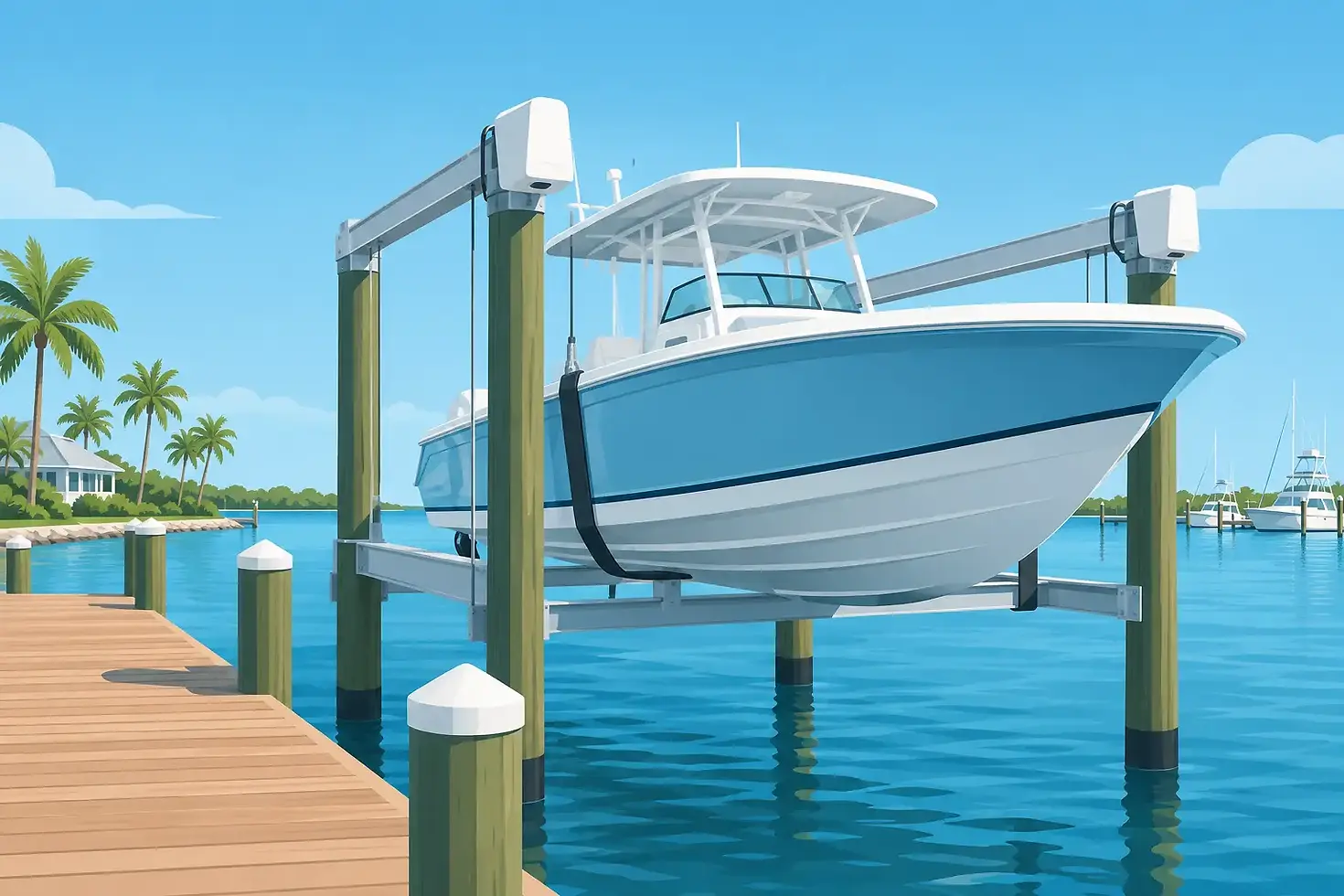
Boat Hoists for Gulf Coast Docks and Marinas
A boat left in the water full time takes on more than rain and sunlight. Along the Gulf Coast, it also faces saltwater exposure, tidal movement, wakes, marine growth, and storm-season uncertainty. Properly selected boat hoists raise the vessel clear of the water, helping protect the hull, running gear, dock structure, and the investment tied to all of them.
For homeowners, a boat lift can make an ordinary dock far more useful. For marina operators and waterfront property managers, it can improve daily operations while reducing wear on valuable equipment. The right system is not simply a matter of choosing a weight rating. It must suit the boat, the site, the dock or boathouse structure, and the conditions the Gulf Coast can deliver.
What Boat Hoists Do for a Waterfront Property
A boat hoist supports and lifts a vessel above the waterline when it is not in use. Keeping a boat dry between trips limits bottom growth, reduces long-term corrosion around underwater components, and cuts down on the need for frequent cleaning. It also keeps the vessel from constantly rubbing against pilings, bumpers, or dock edges as wind and boat traffic move the water.
That protection matters to the dock as well. A boat that stays secured in a lift is less likely to transfer repeated impact loads to a pier or slip. In a boathouse, a properly installed lift helps keep the vessel centered and accessible without crowding the structure or creating an unsafe boarding area.
The return is partly practical and partly financial. A lift does not eliminate maintenance, but it can reduce the wear that comes from leaving a boat afloat year-round. Owners also gain a more convenient launch routine: lower the boat, disconnect the controls, and head out. When the day is done, the boat comes back to its proper stored position.
Choosing Boat Hoists Starts With More Than Boat Weight
The most common mistake in lift planning is sizing a unit based only on the boat's published dry weight. Dry weight does not account for fuel, batteries, motors, hardtops, electronics, fishing gear, coolers, water tanks, and other equipment that stays aboard. A lift must be rated for the real operating weight of the vessel, with a sensible margin for safety and future additions.
Length, beam, hull shape, and engine configuration also affect the design. A pontoon boat, center console, bay boat, wake boat, and cabin cruiser do not sit on bunks the same way. The cradle, bunks, guides, and lifting points need to support the hull correctly. Poor alignment can create uneven loads, make loading difficult, and place pressure where the boat was not designed to carry it.
The location is just as important. Water depth, tide range, bottom conditions, exposure to open water, available power, and the layout of the dock all shape what will work. A protected residential canal may allow a different setup than an open bay shoreline where wind, chop, and vessel traffic are part of everyday life.
Capacity Should Leave Room for the Real Load
A lift that barely meets the calculated weight is not a wise long-term choice. Capacity needs to account for the fully rigged boat, not a brochure number. It also needs to reflect the way the boat will be used. If the owner plans to add a tower, upgrade engines, install a larger trolling motor, or carry more equipment, that should be considered before installation.
A qualified marine contractor can verify the vessel specifications and assess the existing structure before recommending a lift. This helps avoid an expensive mismatch between the boat, the hoist, and the dock.
The Supporting Structure Must Be Ready
Boat lifts transfer substantial loads into pilings, beams, brackets, and framing. An older dock may look sound from the deck but still require structural repairs, reinforcement, or replacement before it can safely carry a new lift. This is especially true where wood has been exposed to saltwater for years or where storms have shifted pilings and hardware.
New construction offers more flexibility because the dock, boathouse, and lift can be designed as one system. The contractor can plan pile placement, beam sizes, clearances, electrical routing, access points, and vessel position from the beginning. That coordination produces a cleaner installation and helps prevent last-minute compromises.
Gulf Coast Conditions Change the Conversation
Along coastal Alabama and the Florida Panhandle, marine construction has to account for weather that can test every component. Salt air accelerates corrosion. High winds can place serious strain on a raised boat and its supporting structure. Storm surge, wave action, and floating debris can affect docks and boathouses that appear well protected during normal conditions.
That is why materials, hardware, and engineering matter. Galvanized or marine-grade components, proper cable and pulley systems, dependable motors, secure mounting, and correctly designed pilings all contribute to lift performance. The best choice depends on the site, but cutting corners on structural details rarely saves money over the life of a waterfront project.
Hurricane preparedness should be part of the discussion from the start. A boat lift can help protect a vessel in normal weather, yet no lift makes a property invulnerable to a major storm. Owners need a practical storm plan that considers whether the boat should be secured on the lift, moved to a safer location, or removed from the property based on the forecast, exposure, and local guidance.
Wide Open Alabama Marine Construction works with waterfront owners who need lift systems built with the realities of the Gulf Coast in mind. As a Hurricane Boat Lift dealer and licensed marine contractor, the team can evaluate both the equipment and the structure supporting it.
Common Lift Styles and When They Fit
Cradle lifts are a familiar choice for many residential docks and boathouses. They use a system of beams, cables, and bunks to raise the boat vertically. They can be configured for a wide range of vessel types and work well where the dock structure is designed to carry the load.
Elevator lifts move the boat along an angled track or guide system. They are often considered where water depth changes significantly or where site conditions make a conventional vertical lift less practical. Their suitability depends on shoreline layout, available space, and structural design.
Freestanding or piling-mounted systems may be used depending on the waterbody, dock configuration, and permitting requirements. The correct approach is site-specific. A lift that works well at one property may not be the right answer a few miles away because bottom conditions, fetch, tides, and shoreline exposure can be entirely different.
Installation Details That Affect Daily Use
A boat hoist should be easy to use without making the dock harder to navigate. Clear walkways, appropriate handrails where needed, safe electrical placement, and convenient control access all matter. So does the boat's position when raised. It should have adequate clearance from roof framing, pilings, finger piers, and neighboring slips.
Guides are another detail worth getting right. Properly placed guides make it easier to center the boat in wind or current and help reduce contact with the dock during loading. Bunks should support the hull evenly and allow the boat to settle into the same position each time.
Electrical work deserves careful attention. Lift motors, controls, lighting, and shore power should be installed to applicable standards and protected from the wet, corrosive environment around the water. An organized electrical layout improves safety and makes future service less complicated.
Maintenance Protects the Lift and the Boat
Even a quality lift needs regular attention. Cables, pulleys, motors, switches, fasteners, bunks, and guides all operate in a demanding environment. Saltwater, humidity, sun exposure, and changing water levels can gradually affect components that looked fine at installation.
Routine inspections can catch frayed cables, loose hardware, worn bunks, corrosion, electrical concerns, and alignment problems before they become larger repairs. After severe weather, it is wise to inspect the lift, dock, pilings, and connections before putting the system back into regular use.
For marina operators and property managers, scheduled maintenance is especially valuable because one neglected lift can disrupt a slip, create a safety concern, and affect tenant satisfaction. A planned service approach gives owners a clearer picture of what needs attention now and what can be budgeted for later.
A well-planned boat lift should feel dependable every time you return to the dock. When the equipment, structure, and site are matched correctly, it protects more than a boat - it supports years of safer, easier time on the water.



Comments