
Marine Piling Replacement Contractors You Can Trust
A dock can look fine from the shoreline while its pilings are losing the strength that holds everything above the water. Soft spots at the mudline, splitting timber, rusting hardware, shifting deck boards, and a noticeable lean are all reasons to call marine piling replacement contractors before a small repair becomes a safety issue or a full dock failure.
Along the Gulf Coast, pilings take punishment year-round. Tide movement, wind-driven waves, saltwater exposure, marine borers, boat wake, changing bottom conditions, and hurricanes all affect how long a piling will perform. Replacing a failed piling is not simply a matter of pulling one post and driving another. The work has to protect the structure, account for water depth and soil conditions, and leave the dock, pier, boathouse, or marina ready for years of use.
When a Marine Piling Needs Replacement
Timber pilings do not always fail above the waterline. In many cases, the most serious damage is hidden around the splash zone or below the mudline, where decay and marine organisms can work unnoticed. A piling may appear solid at a glance but have little remaining structural capacity where it matters most.
Common warning signs include severe checking or splitting, visible rot, missing wood around fasteners, excessive movement when walking on the dock, and pilings that are leaning or have settled. On floating systems, damaged guide pilings can allow a dock to bind, drift out of position, or perform poorly during changing water levels. Marina owners should also watch for repeated damage in one section of a facility, since it may point to wake exposure, vessel impact, or an underlying design issue.
After a tropical storm or hurricane, an inspection is a wise first step even if the structure remains standing. Storm forces can loosen connections, scour soil around piles, and create damage that is not immediately obvious from the deck. Acting early often gives property owners more repair options and helps avoid an emergency closure later.
What Marine Piling Replacement Contractors Actually Do
Qualified marine piling replacement contractors begin by looking at the entire structure, not only the visibly damaged post. They evaluate the condition of adjacent pilings, framing, bracing, decking, connections, utilities, and the shoreline or bottom conditions that support the system. This matters because a new piling installed into a weakened dock frame will not solve the full problem.
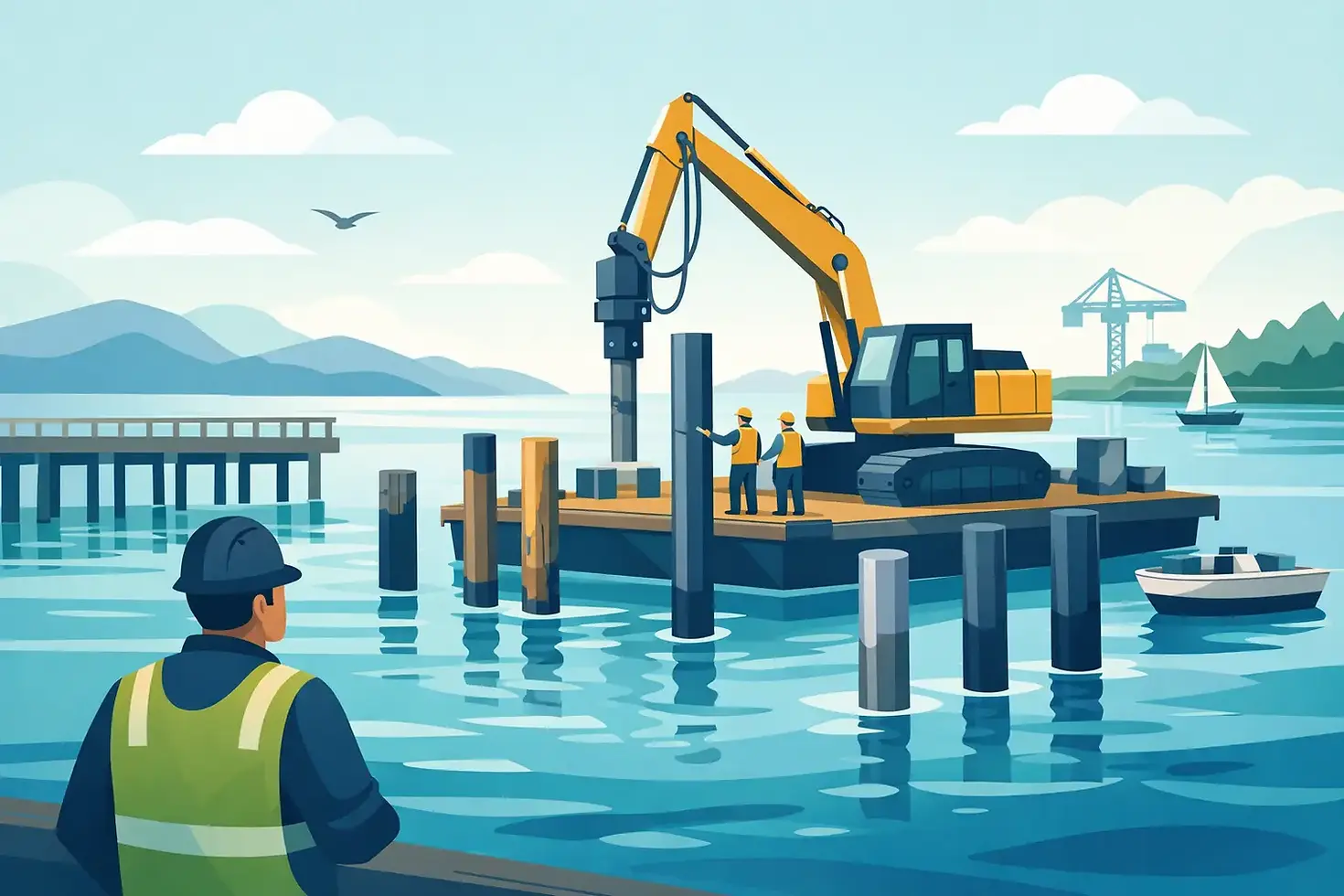
The replacement process generally involves supporting the affected section of the structure, removing the failed piling, and driving or setting a new piling to the required depth and alignment. The contractor then reconnects framing, bracing, and hardware so loads transfer correctly through the repaired area. Access may require a work barge, specialized equipment, shallow-water methods, or work planned around tides and vessel traffic.
There is no single depth or material that fits every job. A residential pier over protected water may have different needs than a high-traffic marina exposed to open-bay wave action. Bottom composition is equally important. Firm soils, soft mud, sand, and areas subject to scour each affect installation methods and the pile embedment needed for dependable support.
Material Selection Is a Long-Term Decision
Pressure-treated timber remains a practical option for many Gulf Coast docks and piers. It is widely used, cost-effective, and well suited to projects where the correct treatment level, pile size, and installation depth are selected for the environment. Timber can also blend naturally with an existing structure.
Concrete, steel, and composite piling systems may be appropriate in certain commercial applications or highly exposed locations. These materials can offer specific performance benefits, but they also bring different costs, weight requirements, connection details, and installation considerations. The right choice depends on the structure, the waterway, the expected loads, local requirements, and the owner’s long-term maintenance plan.
A dependable contractor should explain the options plainly. The lowest initial price is not always the lowest cost over the life of the structure, particularly where heavy boating activity, saltwater exposure, or storm risk is involved.
Why Local Gulf Coast Experience Matters
Waterfront construction is shaped by conditions that change from one shoreline to the next. A contractor working in Orange Beach, Gulf Shores, Fort Morgan, Mobile Bay, Fairhope, Pensacola, or Perdido Key must understand more than basic carpentry. They need experience with tides, coastal weather, access limitations, permitting requirements, soil conditions, and the forces placed on waterfront structures.
Local experience also helps with project planning. A crew may need to coordinate work around weather windows, keep marina slips accessible when possible, protect neighboring vessels, and organize material delivery where land access is limited. For homeowners, clear communication matters just as much. You should know what work is being performed, how the structure will be supported, what areas will be temporarily unavailable, and what the finished repair is designed to accomplish.
At Wide Open Alabama Marine Construction, we take pride in every project because a piling repair is never just about one piece of lumber or one section of dock. It is about protecting the place where families gather, boats are kept, and waterfront businesses serve their customers.
Questions to Ask Before Hiring a Contractor
Before approving a piling replacement project, ask whether the contractor is properly licensed and insured for the type of work involved. Request a clear scope that identifies which pilings will be replaced, what material is proposed, how the existing structure will be supported, and whether framing or hardware repairs are included.
It is also worth asking how the contractor will determine pile depth and alignment, whether permits or agency approvals are needed, and how the work area will be managed. On a marina project, discuss phasing, slip access, safety around customers, and how construction will affect daily operations. On a residential project, ask whether boat lifts, electrical service, water lines, or boathouse supports need to be evaluated at the same time.
A written estimate should be specific enough to compare fairly. An unusually low proposal may exclude necessary bracing, disposal, access equipment, hardware, or repairs discovered once the structure is opened up. Good contractors do not promise that every hidden condition can be predicted, but they do explain how unforeseen repairs will be documented and handled.
Replacement, Repair, or Full Rebuild?
Not every damaged piling requires a complete rebuild. If the surrounding framing is sound and the damage is limited, replacing individual pilings can extend the life of a dock or pier without disturbing the entire structure. This approach is often practical for localized storm damage, isolated rot, or a single impact-related failure.
However, replacing a few pilings may not be the best investment when many supports are near the end of their service life. If framing is deteriorated, deck loads have changed, the structure no longer meets the owner’s needs, or repeated repairs are becoming routine, a larger renovation or rebuild may provide better value. The same is true when a property owner wants to add a boat lift, expand a pier, build a boathouse, or improve storm readiness.
The honest answer is often, “It depends.” A thorough inspection gives you the information needed to choose between a targeted repair and a more complete solution. That decision should be based on structural condition, future use, budget, and the cost of returning to the site for repeated repairs.
Protecting New Pilings After Installation
New pilings need attention after the crew leaves. Periodic inspections help catch loose connections, damaged bracing, vessel impact, and signs of movement before they spread through the structure. Keep an eye on the splash zone, where weathering and marine exposure are often most aggressive, and check for changes after major storms.
Marina operators benefit from scheduled maintenance because small issues can affect customer safety, slip availability, and revenue. Homeowners benefit because a well-maintained dock or boathouse is easier to enjoy and easier to plan for financially. Maintenance does not eliminate the effects of coastal conditions, but it can significantly improve the service life of the investment.
If your dock, pier, boathouse, or marina has a leaning, damaged, or deteriorating piling, do not wait for the next storm to test it. A professional inspection can turn uncertainty into a practical plan for safe, quality repairs that keep your waterfront working the way it should.



Comments