
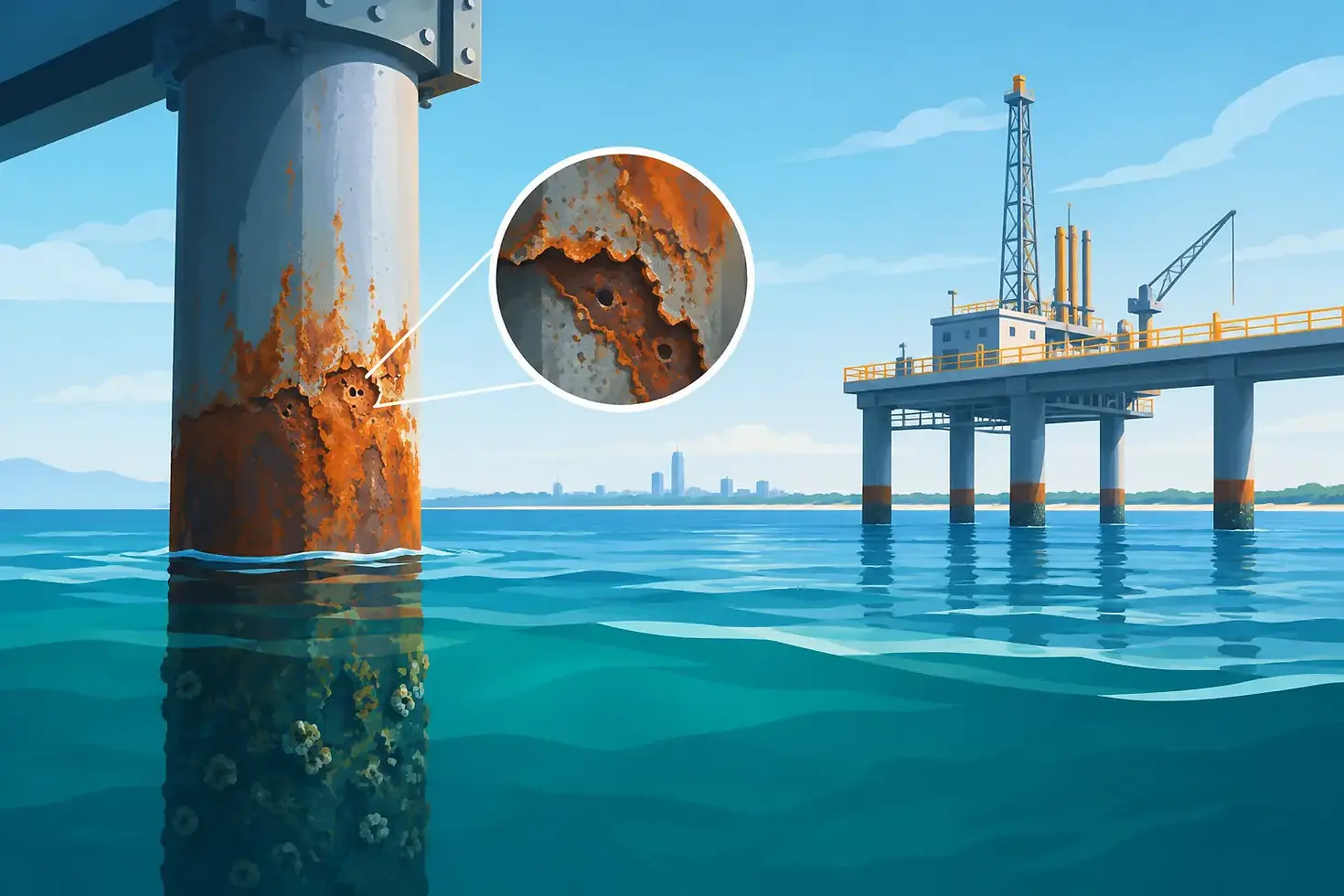
Marine Corrosion and Gulf Coast Structures
Saltwater does not need a major storm to damage a waterfront structure. Day after day, spray, humidity, changing tides, and trapped moisture work on metal connections, pilings, boat lifts, and hardware. Marine corrosion is one of the most common reasons a dock, seawall, or marina facility begins to lose strength long before the damage is obvious from shore.
For Gulf Coast property owners, the goal is not to eliminate exposure - that is not realistic on the water. The goal is to choose the right materials, inspect critical components regularly, and address small failures before they become structural repairs. A well-built waterfront project should be designed with this environment in mind from the first piling to the final fastener.
What Marine Corrosion Does to Waterfront Structures
Marine corrosion is the gradual breakdown of metal caused by exposure to water, oxygen, salt, and electrical activity. Saltwater is especially aggressive because dissolved salts make water more conductive. That allows electrochemical reactions to occur faster than they would in a dry or freshwater setting.
The damage often starts where it is hardest to see: below decking, inside connections, around lift cables, at piling brackets, and along the waterline. A bolt may look acceptable from above while corrosion has already reduced its diameter underneath. A galvanized bracket may show only surface staining, but rust can be forming at cut edges, threads, or areas where its protective coating has been damaged.
Not every rust spot calls for a full replacement. Surface oxidation on some components can be cleaned and treated. Deep pitting, flaking metal, seized hardware, thinning brackets, or movement at a connection is different. Those conditions require an experienced marine contractor to determine whether repair is safe or replacement is the better long-term decision.
Why the Gulf Coast Is Hard on Metal
Along coastal Alabama and the Florida Panhandle, structures face more than direct saltwater contact. Wind carries salt spray onto components above the water. High humidity keeps surfaces damp longer. Heat can speed chemical reactions, while changing water levels repeatedly wet and dry the same areas.
Storms add another layer of risk. Wave action can scrape coatings, shift debris against pilings, and place unusual loads on hardware that has already been weakened. After a hurricane or strong tropical system, visible damage deserves attention, but so do connections that may have been stressed without showing an immediate failure.
Where Corrosion Usually Shows Up First
A dock or boat house is a system, not a collection of separate parts. Corrosion in one connection can affect decking, framing, handrails, utilities, and mooring equipment around it. Owners and marina managers should pay close attention to the following areas during routine walkthroughs:
Fasteners and brackets: Look for orange staining, loose nuts, missing bolt heads, cracked welds, and metal that flakes when touched.
[Boat lift components](https://www.wideopenalabama.com/post/boat-lift-lifespan-what-gulf-coast-owners-can-expect): Cables, pulleys, guide posts, bunk brackets, motors, and mounting hardware operate under load and deserve regular inspection.
Metal-to-metal contact points: Different metals can create galvanic corrosion when they stay wet and are not properly isolated.
The splash zone: Components at and just above the waterline cycle between wet and dry conditions, making them especially vulnerable.
Electrical equipment: Stray current can accelerate corrosion around shore power, dock wiring, lift motors, and marina electrical systems.
Rust streaks on wood or composite decking are often an early warning. They may come from a fastener or bracket below the surface. Do not assume the stain is only cosmetic, especially if it appears near a load-bearing connection.
The Materials Matter, but So Does the Installation
There is no single corrosion-proof material for every waterfront project. The right choice depends on the structure, its location, load requirements, exposure level, budget, and maintenance plan.
Hot-dip galvanized steel is widely used in marine construction because the zinc coating provides protection to the steel beneath it. It can perform well when it is properly specified and installed, but drilled holes, cut ends, worn coatings, and incompatible metals can create weak points. Galvanized hardware is not a set-it-and-forget-it solution.
Stainless steel is often used for certain fasteners and hardware because it resists rust well. However, stainless steel grades are not all the same, and some types are better suited to saltwater exposure than others. Stainless can also develop problems when oxygen is limited in a tight, wet crevice or when it is paired incorrectly with other metals.
Aluminum is common in docks, gangways, and boat lift systems because it is lightweight and naturally forms a protective oxide layer. In a marine setting, though, aluminum needs to be protected from direct contact with incompatible metals and from stray electrical current. Pitting around fittings and mounting points should never be ignored.
The key is to look at the complete assembly. A quality marine structure uses compatible materials, proper isolation where needed, correct fasteners, sound drainage, and connections sized for both daily use and coastal weather. Saving money on hardware during construction can lead to expensive repair work later.
How to Slow Marine Corrosion
Regular care makes a meaningful difference, particularly for docks, boat houses, lifts, and marina facilities that are used year-round. Start with visual inspections at least twice a year, plus an inspection after major storms. Marina operators may need a more frequent schedule because of heavier traffic, electrical systems, and a larger number of connections.
Keep connections clean enough to inspect. Remove accumulated mud, marine growth, leaves, and debris that hold moisture against metal. Rinse salt deposits from accessible lift components, rails, and hardware with fresh water when practical. This is especially useful after rough weather that brings spray well above normal tide levels.
Protective coatings can help, but only when surface preparation and application are done correctly. Coating over active corrosion does not restore lost metal or solve the cause of the problem. The affected component may need cleaning, treatment, repair, or replacement before a coating can do its job.
Electrical checks are equally important. If corrosion appears unusually fast near a lift, shore power pedestal, dock lighting, or marina electrical equipment, have the system evaluated. Stray current corrosion can destroy metal quickly, and it is not something to diagnose by guesswork.
When a Repair Is Enough and When Replacement Makes More Sense
A timely repair may be appropriate when corrosion is limited to replaceable hardware, a small area of coating damage, or an isolated accessory connection. Replacing worn bolts, brackets, lift cables, or damaged components early can protect the larger structure and prevent downtime during boating season.
Replacement becomes the better choice when load-bearing steel has lost section thickness, deep pitting is present, welds are compromised, or multiple connections are failing. The same is true when an older structure has repeated corrosion problems because the original materials or design were not suited to its environment.
Property owners should also consider access and timing. Repairing a compromised bracket while crews can safely reach it is usually less costly than waiting for a deck section, lift, or walkway to fail. For commercial marinas, planned maintenance can reduce interruptions for tenants and help avoid emergency closures.
Wide Open Alabama Marine Construction approaches repairs with the full structure in mind. A corroded component is not treated as an isolated issue if it points to drainage problems, material incompatibility, storm damage, or a larger maintenance concern.
Build Maintenance Into the Project Plan
The best time to plan for corrosion is before construction begins. During design and material selection, owners can make decisions that affect service life, accessibility, and future repair costs. Ask how key connections will be inspected, what hardware is specified, whether dissimilar metals are isolated, and how the structure will handle standing water and salt exposure.
Once the project is complete, keep a simple record of inspections, repairs, storm impacts, and component replacements. That history helps identify patterns and gives a contractor useful information when future work is needed. It also helps marina operators manage maintenance across multiple slips and shared systems.
Waterfront structures earn their keep in a demanding environment. Giving corrosion the attention it deserves protects more than appearance - it helps protect safe access to the water, reliable boating equipment, and the long-term value of the property. If a connection looks questionable, a professional inspection now is usually the practical choice before the next season or storm puts it to the test.



Comments