
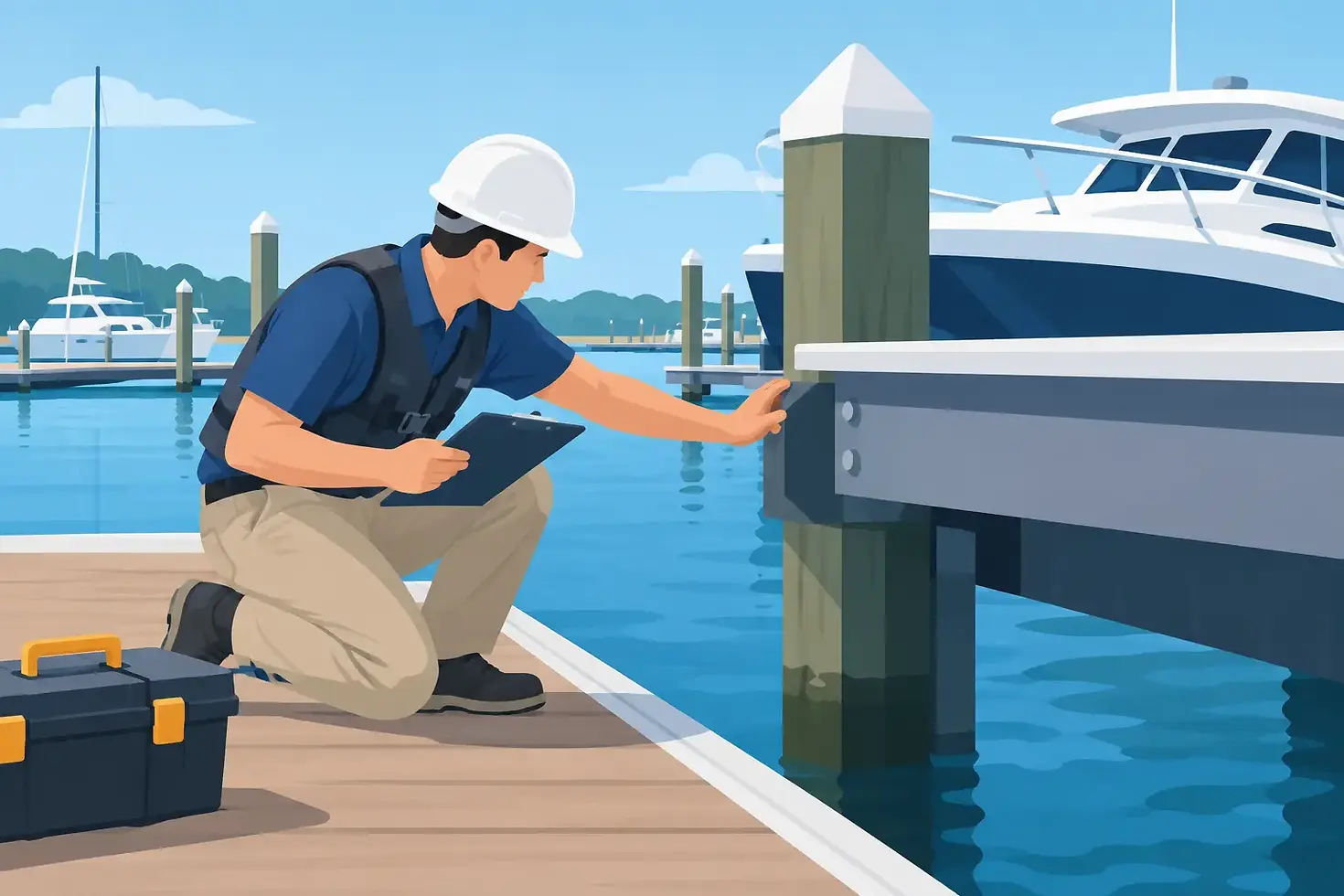
Marina Repair Contractor Review: What to Check
A marina repair contractor review should begin at the waterline, not with the lowest number on a proposal. A marina is a working facility exposed to saltwater, waves, vessel traffic, shifting conditions, and heavy daily use. When pilings loosen, decking fails, electrical systems age, or slips become unsafe, the contractor you choose affects more than appearance. The work can affect safety, operations, revenue, insurance requirements, and the useful life of the entire property.
For marina owners and managers along the Gulf Coast, the right repair partner brings marine-specific experience, clear accountability, and a plan built for the conditions on site. Here is what to evaluate before committing to a repair project.
Start With Marine Repair Experience
General construction experience matters, but it does not automatically translate to marina repair experience. Waterfront work requires a clear understanding of tidal access, submerged conditions, marine-grade materials, pile-supported structures, vessel movement, and local permitting requirements.
Ask a contractor what kinds of marina repairs they perform regularly. A qualified marine contractor should be able to discuss work such as dock and finger pier repairs, piling replacement, deck replacement, framing repairs, seawall issues, utility repairs, boat lift work, boarding structures, and storm-related damage. They should also be willing to explain how they determine whether a damaged component can be repaired or needs replacement.
A contractor with real marina experience will not treat every problem the same way. A cracked deck board is different from deteriorated stringers. A misaligned finger pier may be caused by hardware failure, pile movement, or a larger structural issue. The repair recommendation should match the actual source of the problem.
Look Beyond the Visible Damage
The most expensive repair decisions are often made when someone addresses what can be seen without investigating what supports it. Fresh decking may improve the appearance of a dock, but it will not correct weakened framing, compromised fasteners, failing piles, or utility concerns below the surface.
A thorough site assessment should account for the overall condition of the marina, not just the immediate repair request. That means looking at the age of the structure, water depth, wave exposure, vessel sizes, current loading demands, drainage, connections, hardware, and the condition of adjacent sections.
This does not mean every repair must become a full marina rebuild. In many cases, targeted repairs are the right decision. The key is knowing whether the repair will provide dependable service or simply delay a larger failure. A capable contractor should be direct about that difference.
Ask for the Reason Behind the Recommendation
A good proposal explains the work, but a good contractor also explains why that work is needed. If pilings are being replaced, ask what condition indicates replacement is necessary. If framing is being upgraded, ask whether the existing structure can safely support new decking, utilities, or larger boats.
Clear answers build confidence. Vague statements such as “we will fix what is needed” leave too much room for confusion once work begins. Marina owners need a contractor who can identify priorities and communicate them in plain language.
Review Materials for Gulf Coast Conditions
The Gulf Coast is not forgiving on waterfront structures. Heat, humidity, salt exposure, marine borers, storms, and changing water conditions can shorten the life of materials that may perform well elsewhere.
Your contractor should specify the materials being used and explain why they fit the project. Depending on the repair, that may include treated timber rated for marine use, composite decking, galvanized or stainless hardware, structural connectors, piling materials, and electrical components designed for a waterfront environment.
There are trade-offs with every material choice. Composite decking can reduce routine maintenance and provide a cleaner finished appearance, but it may cost more upfront. Treated wood can be a practical option for many projects, but the product selection, installation details, and maintenance expectations matter. Stainless hardware can offer better corrosion resistance in many applications, while the grade and location of use should be considered carefully.
The lowest material cost is not always the best long-term value. A contractor should help you weigh initial budget, expected service life, maintenance needs, and the role each component plays in structural performance.
Confirm Licensing, Insurance, and Project Responsibility
Marina repairs can involve structural work, equipment, electrical components, permits, subcontractors, and work over water. Before signing an agreement, confirm that the contractor is properly licensed for the scope of work and carries appropriate insurance.
It is also worth asking who will manage the project day to day. Some contractors sell the work and hand off the job with little communication afterward. Others stay involved from site review through completion. For a busy marina, the second approach makes a meaningful difference.
You should know who your point of contact will be, how change orders are handled, what work hours are expected, and how the contractor plans to protect marina users, tenants, and adjacent structures during construction. A repair project should improve your facility without creating unnecessary disruption for the people who depend on it.
Evaluate Permitting Knowledge Early
Permitting can shape the cost, schedule, and allowable scope of marina repairs. The requirements may vary based on location, ownership, waterway jurisdiction, the extent of structural changes, and whether the work is classified as maintenance, repair, or replacement.
An experienced Gulf Coast marine contractor understands that permitting should be discussed before materials are ordered or equipment arrives on site. Some minor maintenance work may move quickly, while major pile replacement, dock expansion, seawall work, or utility upgrades may require additional review.
Ask whether permits are expected, who will prepare the supporting information, and what timeline is realistic. No contractor can control every agency review period, but they should be honest about what may affect the schedule. Avoiding the permit conversation can lead to delays, added costs, or work that must be revised later.
Compare Proposals by Scope, Not Just Price
When reviewing bids, place the proposals side by side and compare what each one actually includes. A lower price may exclude demolition, debris removal, permits, mobilization, utility disconnection, pile work, hardware upgrades, or restoration of nearby areas. Those exclusions can change the final cost quickly.
A well-prepared proposal should identify the repair area, materials, labor, equipment needs, anticipated schedule, payment terms, and any conditions that could require additional work. Marine construction can uncover hidden damage after decking is removed or underwater components are examined. That is normal. What matters is how the contractor documents discoveries and gains approval before moving forward.
Do not assume the most detailed proposal is always the best choice, but do expect enough detail to understand what you are buying. A contractor who takes time to define the scope is more likely to deliver a project with fewer surprises.
Ask How the Repair Will Affect Marina Operations
For a commercial marina, repair work has to be planned around people and boats. Slip access, fueling, loading, seasonal traffic, charter activity, and tenant expectations can all influence the best construction sequence.
Talk with the contractor about access routes, staging areas, temporary closures, noise, debris control, and safety measures. If a section of dock must be closed, ask whether the work can be phased to keep other areas operating. If repairs affect utility service, confirm how boat owners will be notified and how long interruptions may last.
A contractor who understands marina operations will treat your property as an active facility, not an empty job site. That practical awareness protects your customers and helps your team plan ahead.
Use References and Past Work to Judge Reliability
Photos can show finished work, but references can reveal how a contractor performs when schedules change, weather interrupts progress, or hidden conditions appear. Ask for examples of similar marina repairs and inquire about communication, workmanship, jobsite management, and follow-through after completion.
Pay attention to whether the contractor has experience with projects similar in size and complexity to yours. A small residential dock repair and a multi-slip marina restoration are not the same assignment. Both require craftsmanship, but the planning, equipment, coordination, and liability can be very different.
At Wide Open Alabama Marine Construction, we take pride in every project because waterfront repairs must hold up long after the crew leaves the site. Whether your marina needs a focused repair or a larger restoration plan, choose a licensed marine builder that will inspect carefully, communicate clearly, and stand behind the work. The best time to protect your marina is before a manageable repair becomes a costly interruption.



Comments