
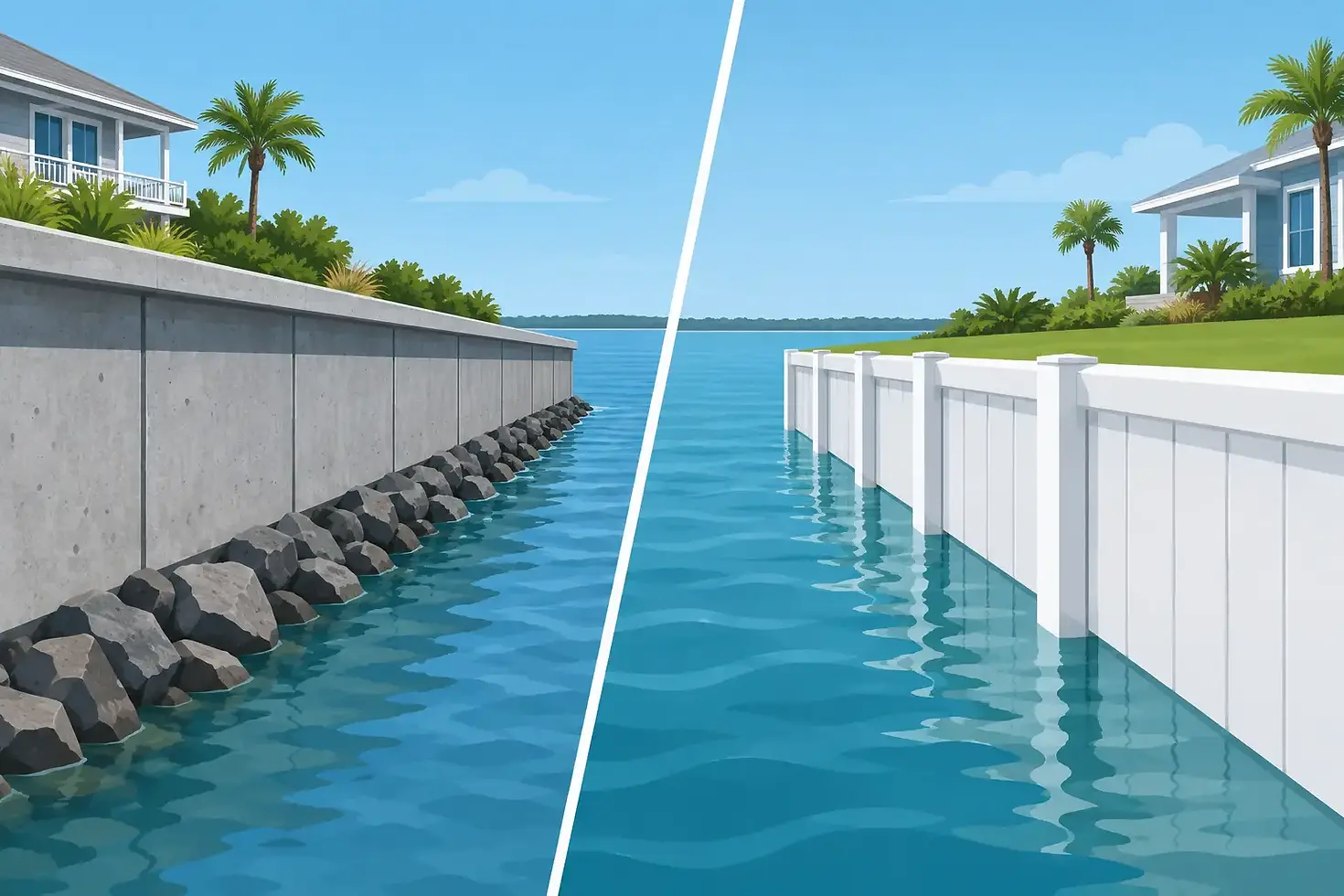
Concrete Versus Vinyl Seawalls Compared
A seawall is not just a boundary at the water's edge. It is the structure standing between your property and daily wave action, shifting soils, storm surge, and years of changing water levels. When comparing concrete versus vinyl seawalls, the right answer depends on what is happening below the waterline as much as what you want to see from the yard.
For Gulf Coast homeowners, marina operators, and waterfront property managers, material selection should begin with the shoreline itself. A wall that performs well on a protected canal may not be the right fit for an exposed bayfront lot. Soil conditions, vessel wake, water depth, access for equipment, existing erosion, and the structure behind the wall all affect the best design.
Concrete Versus Vinyl Seawalls: The Core Difference
Concrete and vinyl seawalls protect shorelines in different ways. A concrete seawall is a rigid, heavy structural system. It is often built with reinforced concrete panels, cap sections, tieback systems, and a properly prepared foundation. Its mass and strength make it well suited to demanding waterfront conditions when it is engineered and installed correctly.
Vinyl seawalls use interlocking sheet piles driven into the shoreline to create a continuous barrier. The panels are typically supported with a cap and anchoring system behind the wall. Vinyl is corrosion-resistant and can be an effective solution for many residential canals, protected waterways, and lower-energy shorelines.
Neither material is automatically better. The question is which system matches the forces on your property and the expected service life of the project.
When Concrete Is the Better Choice
Concrete seawalls are commonly selected where strength, rigidity, and long-term structural performance are the priority. They can handle substantial lateral pressure from retained soil and are often a strong option for waterfront lots with active wave energy, large boat wakes, steep grade changes, or heavy improvements near the shoreline.
A well-built concrete wall also provides a solid foundation for a finished cap, walkways, fencing, lighting, and other waterfront features. For commercial properties and marinas, concrete can be especially practical where the seawall must support higher-use areas or tie into docks, fixed piers, and utility infrastructure.
Concrete does require careful construction. Reinforcement, drainage, joints, tiebacks, and soil preparation are not details to overlook. Water trapped behind a seawall creates pressure that can contribute to cracking, movement, or failure over time. Proper drainage and backfill help protect the wall from the inside, while sound foundation work helps it resist pressure from the water side.
The trade-off is cost and access. Concrete construction can require heavier equipment, more site preparation, and more time than a simpler sheet-pile installation. On a difficult-access property, those logistics can have a meaningful effect on the project budget.
Concrete Holds Up Well, But It Still Needs Attention
Concrete has a reputation for lasting a long time, and for good reason. However, saltwater exposure, freeze-thaw cycles in some areas, settlement, and storm impacts can all affect its condition. Small cracks are not always a structural emergency, but widening cracks, displaced cap sections, exposed reinforcement, voids behind the wall, or leaning sections should be evaluated promptly.
Routine inspections after major storms can identify trouble before a repair becomes a replacement. The same is true for drainage outlets and the soil immediately behind the seawall. If backfill is washing away through joints or beneath the cap, the structure needs attention even if its face still appears sound.
Where Vinyl Seawalls Make Sense
Vinyl seawalls are often a practical choice for protected residential waterfronts. The material does not rust, and its smooth surface can resist marine growth better than rougher materials. Vinyl sheet piles are also lighter to handle than large concrete components, which can help on sites with limited equipment access.
For a canal-front home with moderate water movement, a properly designed vinyl wall may provide dependable shoreline protection with a clean, finished appearance. Vinyl is available in several colors and profiles, allowing property owners to coordinate the wall with existing docks, decking, and landscaping.
Installation can also be less disruptive in certain locations. That does not mean it is a simple job. A vinyl seawall still needs the right embedment depth, anchoring, cap design, drainage plan, and connection details. Panels that are not driven deeply enough or are inadequately supported can move under pressure, regardless of how new they look from above.
Vinyl Has Limits in High-Energy Conditions
Vinyl is flexible by design, which can be helpful in some soil conditions but less desirable in others. Where a shoreline receives repeated heavy wave action, strong current, significant storm exposure, or frequent large-vessel wakes, a vinyl system may not provide the level of rigidity the site requires.
The panel strength, wall height, soil load, and anchor layout all matter. A taller wall retaining more soil needs more than a standard residential detail. This is why material selection should never be based on appearance or initial price alone. The same vinyl panel may be appropriate at one property and undersized at another only a few miles away.
Compare the Full Cost, Not Just the Installation Price
The upfront cost of a seawall is only one part of ownership. Concrete may carry a higher initial price in some projects, especially where excavation, reinforcement, and access are complicated. Yet its structural capacity and ability to support waterfront improvements may offer better value over the life of the property.
Vinyl may have a lower initial cost on suitable sites and can reduce concerns about corrosion. But a lower price does not help if the selected wall is not designed for the water conditions, retained soil, or improvements behind it. Rebuilding an undersized seawall is far more expensive than choosing the right system from the start.
It also helps to consider what the wall must connect to. A new dock, boat lift, bulkhead walkway, or marina utility upgrade may change the structural demands along the shoreline. Planning these elements together can avoid cutting into a new cap or modifying anchors after the fact.
Site Conditions Should Drive the Decision
The Gulf Coast does not offer one standard shoreline condition. Orange Beach, Gulf Shores, Mobile Bay, Perdido Key, Pensacola, and the many protected canals and bays in between can present very different challenges. Tidal movement, fetch, wave exposure, soil type, and hurricane risk vary from property to property.
Before recommending concrete or vinyl, an experienced marine contractor should evaluate the existing wall, if one is present, and look for signs of erosion, settlement, leaning, failing tiebacks, voids, or damaged drainage. They should also consider the elevation of the finished cap, the loads behind the wall, and how water moves across the site during severe weather.
Permitting is another practical factor. Work along the shoreline may require coordination with local, state, or federal agencies, depending on the location and scope. A project that changes the wall alignment, affects submerged land, or includes dock work may have additional requirements. Building the correct wall is only part of doing the job right.
Do Not Overlook Maintenance and Storm Readiness
Both concrete and vinyl seawalls benefit from regular inspection. Walk the cap, inspect the waterline, and look at the ground behind the wall after heavy rain or storm events. Keep drainage areas clear, address erosion quickly, and avoid placing unexpected heavy loads close to the wall without professional guidance.
If your seawall supports a dock, lift, or boathouse area, inspect those connections as well. Waterfront structures work as a system. Movement at the seawall can affect decking, pilings, utilities, and access points, while a failing dock connection can create damage at the wall.
For properties in hurricane-prone areas, preparation matters before a named storm is approaching. Address known weak points during normal conditions, maintain lifts and dock hardware, and have a contractor inspect any damage once it is safe to access the shoreline.
Choose the Wall That Fits the Property
Concrete is often the stronger choice for high-load, high-energy, or heavily developed shorelines. Vinyl can be an excellent choice for the right protected waterfront, particularly when corrosion resistance, appearance, and installation access are priorities. The material alone does not determine performance. Design, installation quality, drainage, anchoring, and ongoing care all matter.
Wide Open Alabama Marine Construction takes pride in helping Gulf Coast property owners make decisions based on real site conditions, not a one-size-fits-all recommendation. Before committing to either material, have the shoreline evaluated with the next twenty years in mind. A seawall built for the demands of your waterway protects more than your bank - it protects the investment and memories behind it.



Comments