
How to Install Dock Fenders Properly on Gulf Docks
A dock fender only works when it meets the boat at the right point. A strip mounted too high, too low, or on the wrong side of a piling can leave gelcoat, rub rails, and dock framing exposed when wind, boat wakes, or changing water levels push a vessel around. To install dock fenders properly, start with the way boats actually approach, tie up, and move at your dock - not with a one-size-fits-all mounting pattern.
For Gulf Coast waterfront properties, fender placement also has to account for tide movement, rough afternoon weather, storm surge exposure, and the repeated traffic that comes with an active dock or marina. Taking time to plan the installation protects the boat, reduces dock repairs, and creates a safer berth for everyone using the waterfront.
Start With the Boat and Dock Layout
Before drilling a hole or setting a fastener, identify where contact occurs. Bring the boat into its normal slip or tie-up position and look at the relationship between the hull and the dock. The fender needs to protect the contact area along the hull, not simply cover the most convenient section of dock face.
A typical boat slip may need protection along the outside face of a finger pier, at the end of the slip, and around any pilings where the boat could make contact. A side-tie location may need continuous rub rail or vinyl dock edging along the full length of the berth. Corners deserve special attention because a boat that swings on a line often contacts them first.
Consider the vessel's beam, hull shape, rub rail height, and normal waterline. Pontoon boats, center consoles, sportfishing boats, and personal watercraft do not all meet a dock in the same place. If multiple vessels use the same berth, set the primary fender protection for the boat that sits closest to the structure, then add coverage where smaller or taller vessels need it.
Water level is just as important. Check the boat position at typical high and low tide, especially in areas with changing wind-driven water conditions. A fender mounted for a perfect calm-water fit can become ineffective when the tide shifts or a strong wake lifts the boat.
Choose the Right Type of Dock Fender
Dock fenders come in several profiles, and the best option depends on the dock construction and the type of protection needed. Flat vinyl dock fendering is commonly used along straight dock faces and finger piers. It provides a broad, durable buffer where a boat regularly rests against the dock.
Pile-wrap fenders protect the side of round pilings. They are useful on open docks, marina slips, and structures where pilings are the likely point of contact. Corner fenders are built to absorb impact at exposed dock corners, while heavy-duty rubber bumpers may be appropriate at high-traffic commercial locations or landing areas.
Choose marine-grade materials designed for sun, saltwater, moisture, and repeated impact. Inexpensive materials can harden, crack, fade, or pull loose long before the dock itself needs attention. On the Gulf Coast, ultraviolet exposure and salt air are hard on every waterfront component, so quality materials and corrosion-resistant hardware are part of the installation, not optional upgrades.
The thickness and profile matter, too. A larger boat, a tight slip, or a location exposed to frequent wakes may need deeper fendering than a quiet residential tie-up. More cushioning is not always better, however. Oversized fenders can narrow an already tight berth and make boarding awkward. The goal is enough protection to prevent hard contact while keeping the slip usable.
How to Install Dock Fenders Properly
Begin with clean, sound mounting surfaces. Inspect the dock face, fascia board, framing, and pilings for rot, splitting, loose fasteners, or movement. Installing new fendering over damaged wood or unstable framing only hides the problem until the next impact pulls everything apart.
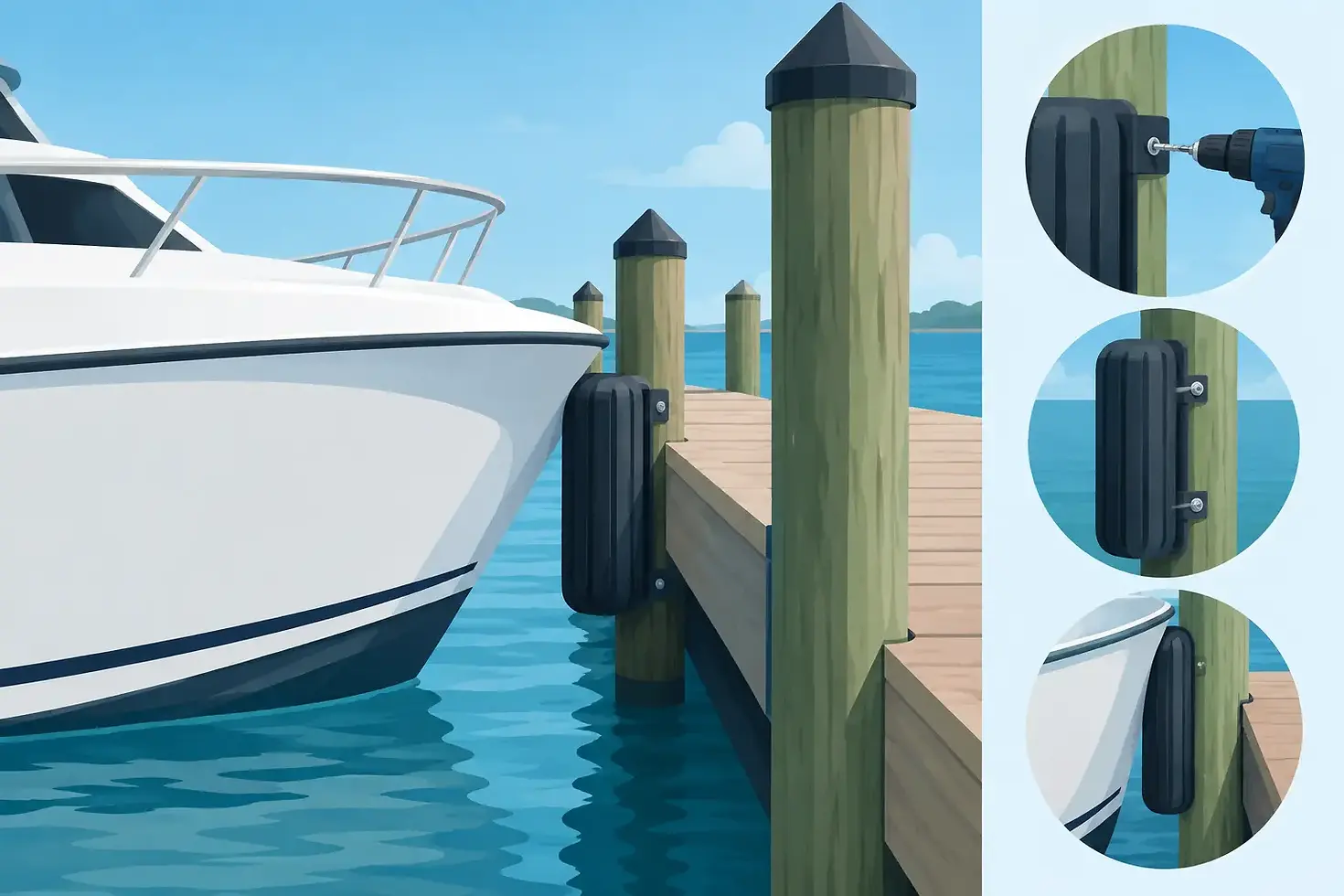
Lay out the fender position before fastening it. Hold the material in place, mark the ends, and verify that the coverage extends beyond the usual contact zone. On straight dock faces, keep the fender line level and consistent. On a piling, position the fender on the side facing the boat's approach, allowing coverage across the area where the hull may swing or drift.
Use fasteners rated for marine conditions, such as stainless steel hardware appropriate for the material and mounting surface. Spacing should follow the fender manufacturer's recommendations, but the practical rule is simple: secure the material often enough that it cannot sag, curl, or pull away between fasteners. Pre-drilling can help prevent splitting in wood and gives you a cleaner, more controlled installation.
Do not overtighten fasteners to the point that they pinch or distort vinyl fendering. Materials expand and contract in heat, and excessive pressure can create weak points that split over time. The fender should sit firmly against the dock while retaining its intended shape.
When installing a continuous run, keep joints tight and supported. Gaps between sections can catch lines, expose sharp edges, or create a hard point where the boat can strike the dock. Finish exposed ends with the correct end caps or termination pieces when available. This gives the installation a cleaner appearance and helps prevent snagging.
Mounting on Fixed Docks and Pilings
Fixed docks require a careful look at tide range and boat movement. The fender should protect the boat at normal water levels while still providing useful coverage as the water rises or falls. Long vertical pile fenders often make sense where water movement is significant because they cover a larger range of possible contact points.
Attach pile fenders to sound timber, using hardware long enough to hold securely without creating unnecessary damage to the piling. Avoid placing hardware where it could interfere with existing bracing, utility runs, or structural connections. If a piling is severely checked, decayed, or loose, address that structural issue before adding fender material.
Mounting on Floating Docks
Floating docks move with the water, which can simplify vertical alignment with a boat. Still, the dock structure must be able to take the load. Check the framing and edge boards before mounting fenders, particularly on older sections where repeated impact may have loosened connections.
Because floating docks rise and fall, pay close attention to gangways, finger-pier corners, and transition points. These are common contact areas when wind or wakes move both the boat and dock. Fendering should not obstruct cleats, boarding access, or the safe path of travel along the dock.
Protect the Hardware and Finish the Job
A quality installation is more than putting material on the dock face. Every fastener head should sit flush and smooth, with no sharp edges that can damage a hull, snag a dock line, or catch bare feet. Trim or cap fender ends cleanly. Remove debris, metal shavings, and old hardware from the work area before boats return to the slip.
After installation, bring the boat into position and test the berth under normal line tension. Look for places where the boat can still reach bare wood, exposed pilings, or dock corners. Then consider what happens when the wind comes from a different direction. A boat that appears protected on a calm morning may shift several inches when a passing wake or afternoon storm rolls through.
Adjust dock lines as needed, but do not rely on lines alone to solve a fender placement issue. Lines control the boat's range of movement. Fenders provide the buffer when movement still occurs. Both have to work together.
Inspect Fenders as Part of Dock Maintenance
Dock fenders need regular checks, especially after heavy weather, high-water events, or a busy boating season. Look for loose screws, pulled fasteners, tears, flattened sections, cracked vinyl, and hidden damage behind the fender line. Check that the dock framing remains solid where the material is attached.
For marina operators, a routine inspection schedule helps identify worn sections before a tenant's boat is damaged. For homeowners, a quick check when washing the boat or walking the dock can prevent a small repair from becoming a costly replacement project. Wide Open Alabama Marine Construction takes pride in building and maintaining waterfront structures that are prepared for the conditions they face.
The best dock fender installation should be easy to overlook once it is complete. It sits securely, protects the boat where it matters, and holds up through everyday use without becoming another problem to manage. If your dock has structural damage, irregular piling placement, or a difficult slip layout, professional guidance can make the difference between a neat-looking installation and dependable long-term protection.


Comments