
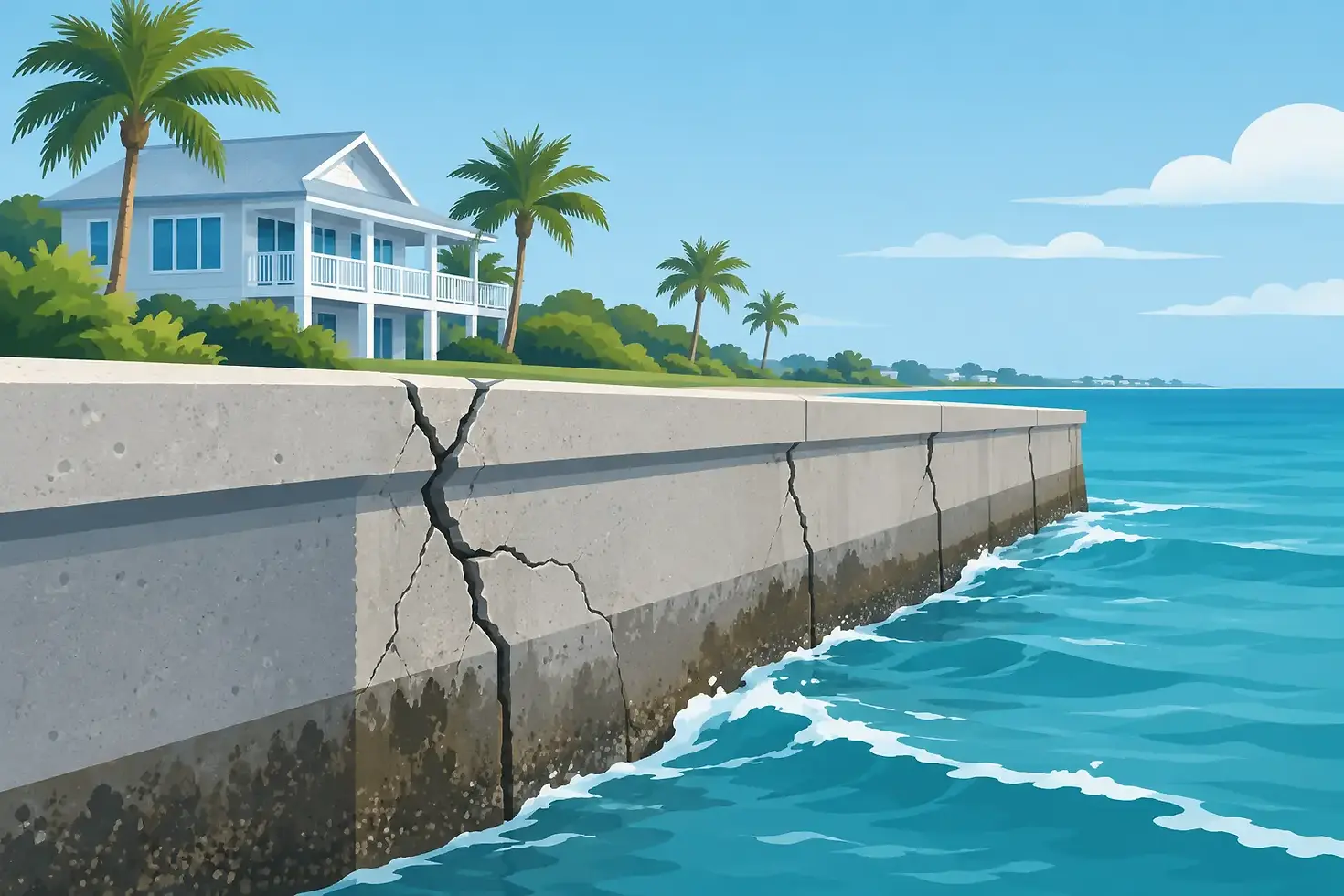
What Causes Seawall Cracks on Gulf Coast Property?
A hairline crack near the top of a seawall can be a normal sign of concrete aging. A widening crack beside a washed-out lawn, a leaning wall, or a gap opening at a cap is a different matter altogether. Understanding what causes seawall cracks helps Gulf Coast property owners respond before erosion, water pressure, and structural movement turn a manageable repair into a major waterfront project.
A seawall does more than define a shoreline. It holds soil in place, protects improvements behind it, and absorbs constant pressure from water, waves, tides, boats, and changing ground conditions. Along the Alabama coast and Florida Panhandle, that work is made harder by heavy rain, salt exposure, storm surge, and active waterways. Cracks are often the first visible clue that one of those forces is gaining ground.
What Causes Seawall Cracks?
Most seawall cracks do not have one single cause. They develop when the wall, the soil behind it, and the water in front of it stop working as one stable system. The location, width, direction, and condition of each crack help determine whether the issue is mostly cosmetic or a sign of movement that needs prompt attention.
Hydrostatic pressure behind the wall
Water trapped in the backfill is one of the most common sources of stress on a seawall. After a hard rain, groundwater and runoff can saturate the soil behind the wall. That wet soil becomes heavier, while trapped water creates outward pressure against the structure.
Weep holes and drainage systems are intended to relieve that pressure. When they are clogged, missing, buried by landscaping, or simply inadequate for current conditions, water has nowhere to go. Concrete may crack under the load, particularly near joints, panel connections, tie-back locations, or the base of the wall.
A crack that appears or worsens after periods of heavy rain deserves attention, especially if water is seeping through it or the ground behind the seawall remains soft and saturated.
Soil loss and erosion
A seawall relies on properly supported soil. When backfill washes out through failed joints, cracks, drainage paths, or gaps around utilities, voids can form behind the wall. The ground may begin to settle, leaving low spots in the yard, loose pavers, tilted fencing, or a noticeable separation near the seawall cap.
Erosion can also occur at the toe of the wall, where wave action and currents remove supporting material from the water side. Without adequate support, the wall can rotate, settle, or shift. Cracks may then form as the structure bends under loads it was not designed to carry.
This is why a crack and a sinkhole-like depression behind the wall should never be treated as separate maintenance issues. Together, they can indicate active soil loss that needs to be located and corrected.
Wave action, wakes, and changing water conditions
A protected canal seawall and an exposed bay-front seawall face very different forces. Repeated wave impact, boat wakes, tidal current, and wind-driven water can gradually scour the base of a wall and weaken adjacent shoreline protection. Over time, even a well-built wall can show stress if the conditions around it have changed.
Newer, larger boat traffic, altered channels, lost vegetation, or storm damage can increase wave energy reaching a shoreline. A crack may be the visible result, but the repair plan has to address the water conditions causing the movement. Patching concrete without addressing scour or shoreline exposure may only delay the next failure.
Settlement and shifting ground
Coastal soils are not always uniform. Fill material, sandy soils, organic soils, and areas with a high water table can settle at different rates. If part of a seawall foundation settles while another section remains stable, the wall can crack at the transition.
Settlement-related cracks may appear as diagonal lines, separations at panel joints, or cracks concentrated near a corner or change in elevation. They may also be accompanied by a wall that no longer appears straight when viewed along its length.
Some minor settlement occurs over the life of many waterfront structures. The concern rises when movement is ongoing, when cracks are widening, or when the wall has begun to lean, bow, or pull away from the land behind it.
Corrosion of reinforcing steel and hardware
Saltwater is hard on marine construction materials. When chloride-rich moisture reaches reinforcing steel inside concrete, the steel can corrode and expand. That expansion pushes outward on the surrounding concrete, causing cracking, spalling, and sections of concrete to break away.
Older concrete walls are more vulnerable when protective cover has worn down or previous cracks allowed moisture to reach the reinforcement. Corrosion can also affect tie rods, connectors, and other metal components that help resist soil pressure. A rust stain, exposed steel, or crumbling concrete is more than an appearance issue. It calls for an assessment of the underlying reinforcement and connection system.
Storm damage and sudden impact loads
Hurricanes and tropical storms can expose weaknesses that were not obvious before. Storm surge, debris impact, large waves, rapid water-level changes, and saturated soils all place unusual loads on a seawall. In some cases, the wall survives the event but develops cracks that grow over the following months as compromised soil drains and settles.
Impact from a vessel, barge, floating debris, or construction equipment can also crack a wall locally. Even when the damaged area looks limited, nearby panels, caps, tie-backs, and joints should be checked. Marine structures distribute loads, so one hard impact can affect more than the visible point of contact.
Which Seawall Cracks Need Fast Attention?
Not every crack requires emergency work, but property owners should not rely on appearance alone. A narrow, stable surface crack may be addressed through maintenance and monitoring. A structural crack often comes with other warning signs.
Call for a professional evaluation when cracks are widening, extending vertically or diagonally, or appearing in multiple locations. The same applies when the wall is leaning or bulging, the cap has separated, water is carrying soil through the wall, or depressions are forming behind it. Loose concrete, exposed rebar, failed tie rods, and sections that move under pressure are also clear reasons to act promptly.
Take dated photos from the same locations and make note of changes after heavy rain, high tides, or storms. This simple record can help establish whether the issue is stable or active. Do not fill a crack with sealant and assume the problem is solved if the wall is moving or soil is washing out. Surface repairs have a place, but they cannot replace drainage correction, void filling, structural reinforcement, or panel replacement when those measures are needed.
A Repair Plan Should Match the Cause
The right repair depends on the type of seawall, its age, water exposure, access conditions, and the source of failure. Concrete seawalls, vinyl sheet pile walls, bulkheads, and older timber systems each fail differently and require different repair approaches.
For example, a localized crack caused by surface deterioration may be repairable after the concrete and reinforcement are properly evaluated. A wall with washed-out backfill may need void stabilization and drainage improvements in addition to crack repair. If the wall has rotated or lost its tie-back support, a more extensive structural repair or replacement may be the responsible option.
Permitting can also affect the scope and timing of waterfront work. Repairs near the waterline may involve local, state, or federal requirements, particularly when the work changes the wall footprint, shoreline, or adjacent habitat. Planning the project correctly from the start helps avoid a repair that creates a permitting problem later.
Protect the Wall Before Small Problems Spread
Routine inspection is one of the most practical ways to extend seawall life. Walk the property after major rain events and storms. Look at the land side as closely as the water side, paying attention to drainage outlets, low areas, cap joints, and any change in wall alignment. Keep drainage paths clear, address leaking irrigation near the wall, and avoid adding heavy loads close to the edge without confirming the structure can support them.
A seawall crack is not automatically a failure, but it is always information. When the wall is protecting a home, marina, dock, or business property, that information deserves an experienced response. Wide Open Alabama Marine Construction takes pride in evaluating waterfront conditions with the full shoreline system in mind, so property owners can make a sound decision before minor movement becomes a larger loss.


Comments